

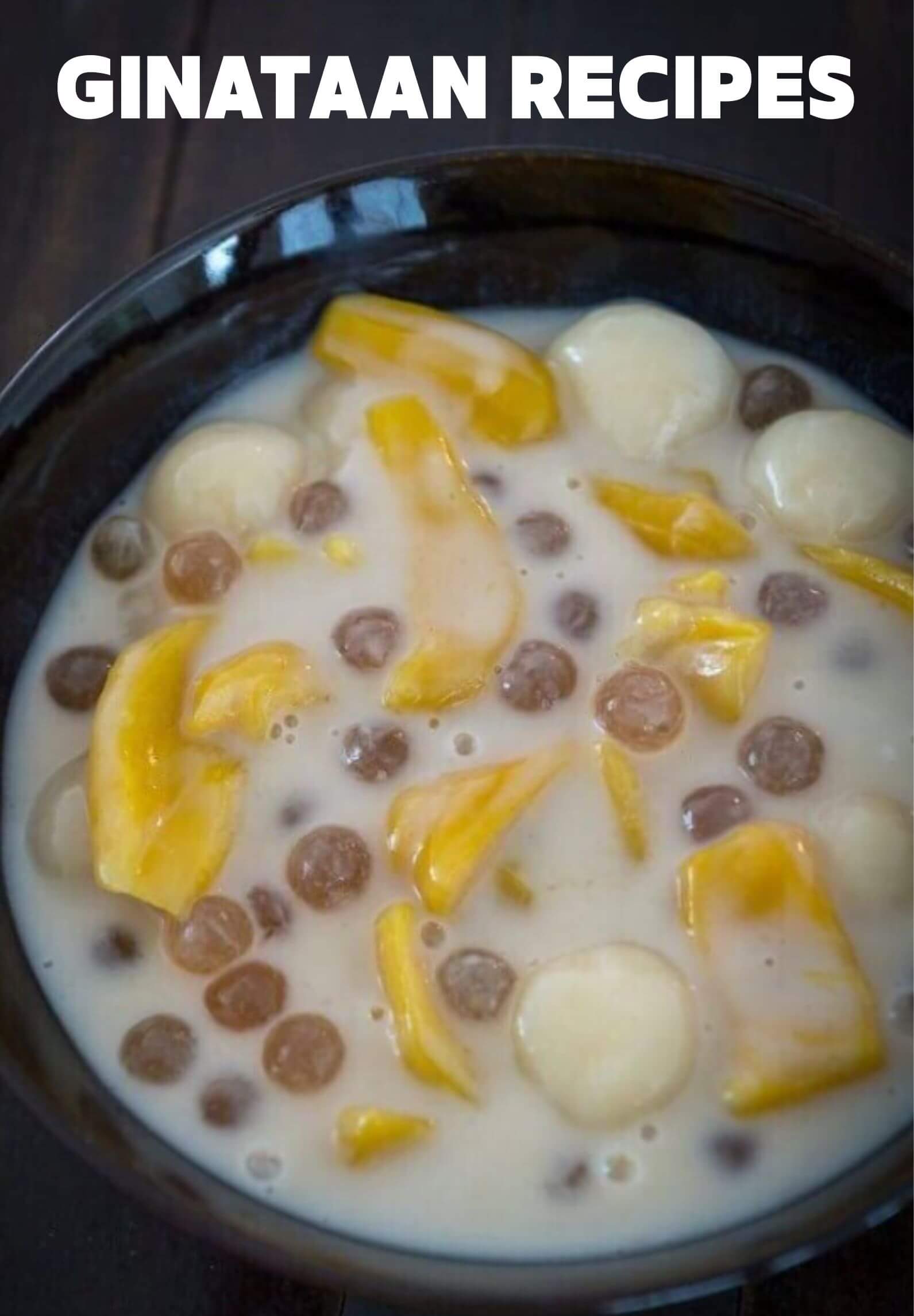

Ginataan is a cooking method, not one dish. Gata means coconut milk, and anything simmered in it belongs under that name. That is why this list starts with spicy pork belly and ends with sweetened corn. Both are ginataan.

The word gets used two ways, and that can trip people up. Say ginataan on its own and most people picture the dessert, the warm bowl with bilo-bilo and sago in it. Add an ingredient after it, as in ginataang manok or ginataang hipon, and now you are talking about dinner. I have both here. If you came for the dessert, jump to the sweet section at the bottom.
I have been publishing ginataan recipes since 2009. Going back through the category to build this list, I counted almost seventy of them, which was more than I expected.
The one thing I pay attention to in every one of these is the gata itself. Cook it down until a little oil separates out and rises to the surface. That is the stage where the flavor turns rich instead of milky, and it is worth the extra ten or fifteen minutes on the stove. Keep the heat at a slow simmer while it reduces. A hard boil is what makes coconut milk curdle.
I organized this list by what goes in the pot, because that is how I decide what to cook. Pork, chicken, fish, seafood, vegetables, then the sweet ones. Pick a section and go from there. Some of these are dishes I grew up with in Las Piñas. Others I worked out later, after I moved to the US and started cooking for my own family.
Fresh gata is better than canned. There is no comparison, and I say so on almost every recipe here. But canned coconut milk is what I use most of the time because that is what the store carries. If you can get fresh, squeeze it and use the first extraction, the kakang gata, at the end of cooking.
Pork in Coconut Milk
Pork and gata is the combination most people think of first, and Bicol is the reason why. These are the recipes where the coconut milk cooks down the furthest, until the sauce clings to the meat instead of pooling around it.
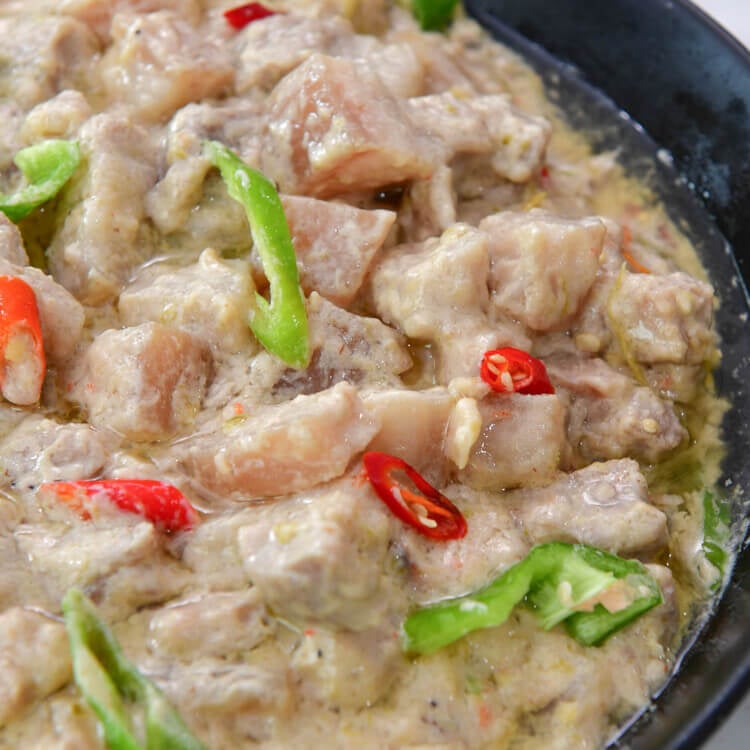
Bicol Express
The one that made this whole style famous. Pork belly, plenty of long green chili, shrimp paste, and coconut milk cooked down until the sauce is thick. It was named after a train and popularized in Malate, though Bicolanos will tell you a similar dish called gulay na lada was already being cooked in their province. Reduce the sauce further than you think you should. That is where the flavor is. I have written up seven versions of this one dish if you want to compare them side by side.
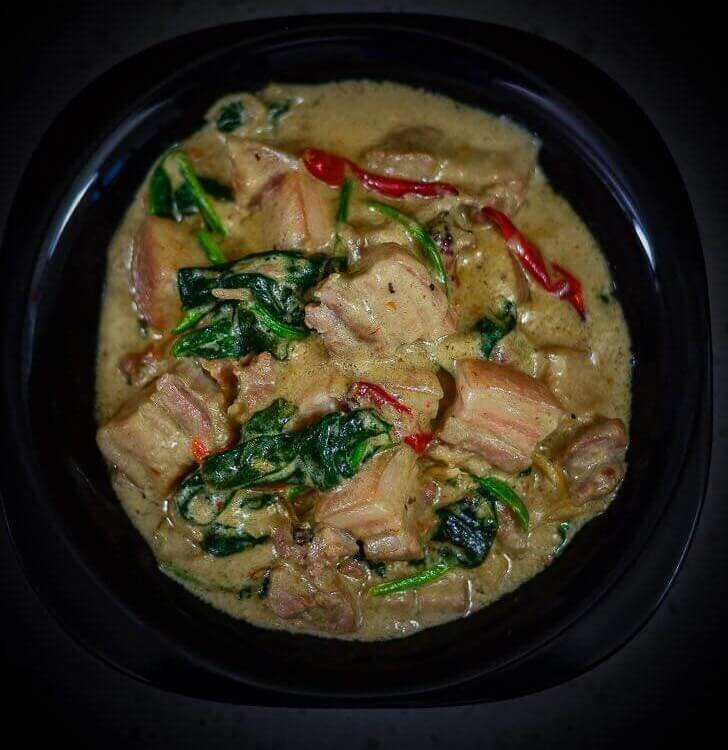
Pork Ginataan
My version of ginataang baboy. I like it rich, creamy, and spicy, with a thick sauce rather than a soupy one. I use coconut milk and coconut cream together, and about twelve Thai chili peppers go in. Use coconut cream alone if you want it heavier.

Gising Gising
Ground pork and chopped green beans in coconut milk with bagoong and chili. The name means “wake up,” and the heat is the reason. I eat this for breakfast with white rice. This is easy to put together. If you want the winged bean version, I have that too as Sigarilyas Gising Gising.
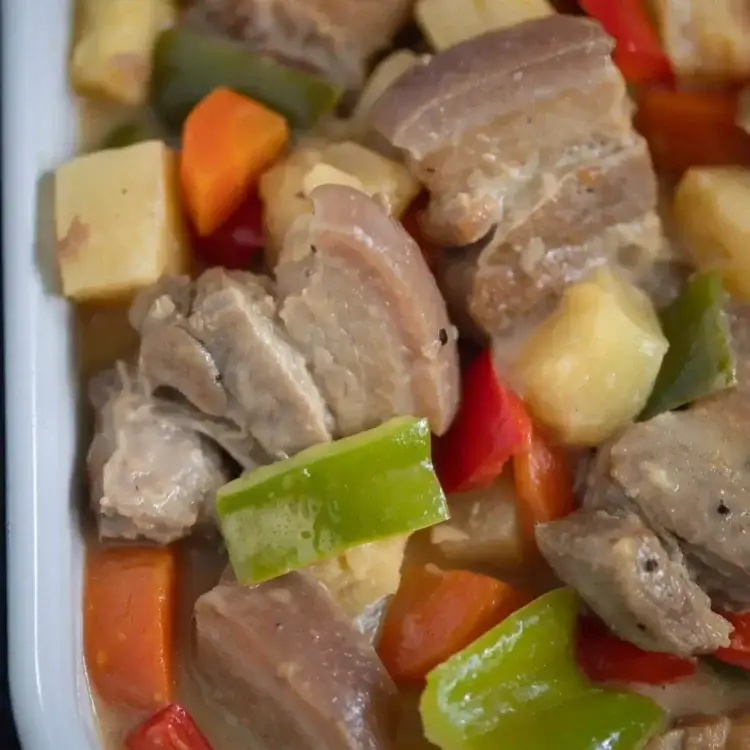
Pininyahang Baboy sa Gata
Pork belly simmered with pineapple chunks, pineapple juice, and coconut milk. The pineapple makes this the sweet one in the pork section. Bell pepper and carrots go in near the end. Add half the pineapple chunks with the juice at the start and save the rest for the finish so they hold their shape.
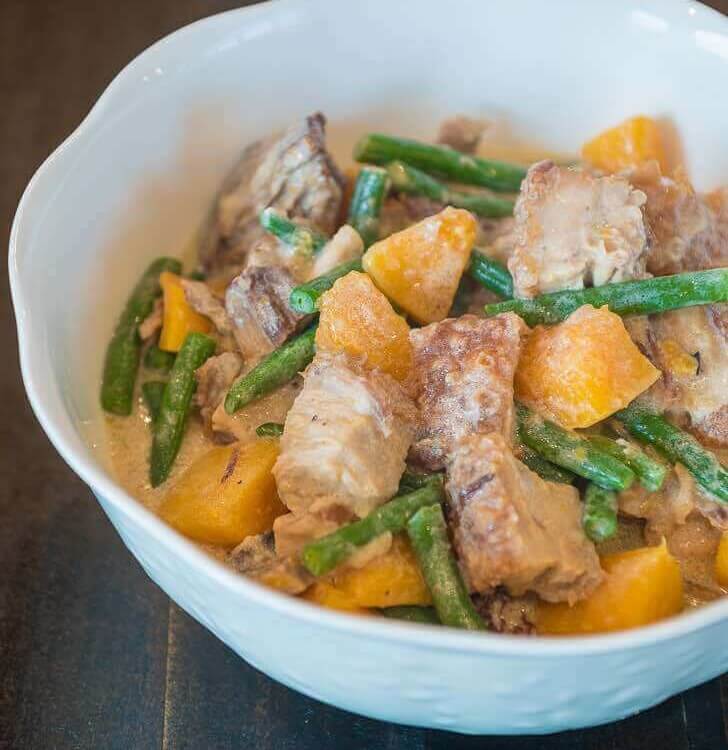
Ginataang Lechon Kawali with Kalabasa and Long Green Beans
Crispy pork belly dropped into a gata sauce with squash and beans. The crackling softens where it meets the sauce and stays crisp on top, which is the whole point of adding it at the end. This is a good way to use leftover lechon kawali from the night before.
Chicken in Coconut Milk
Chicken takes gata differently than pork does. There is less fat rendering into the sauce, so the coconut milk has to carry more of the flavor on its own. Bone-in pieces help. I skip breast on its own for these.
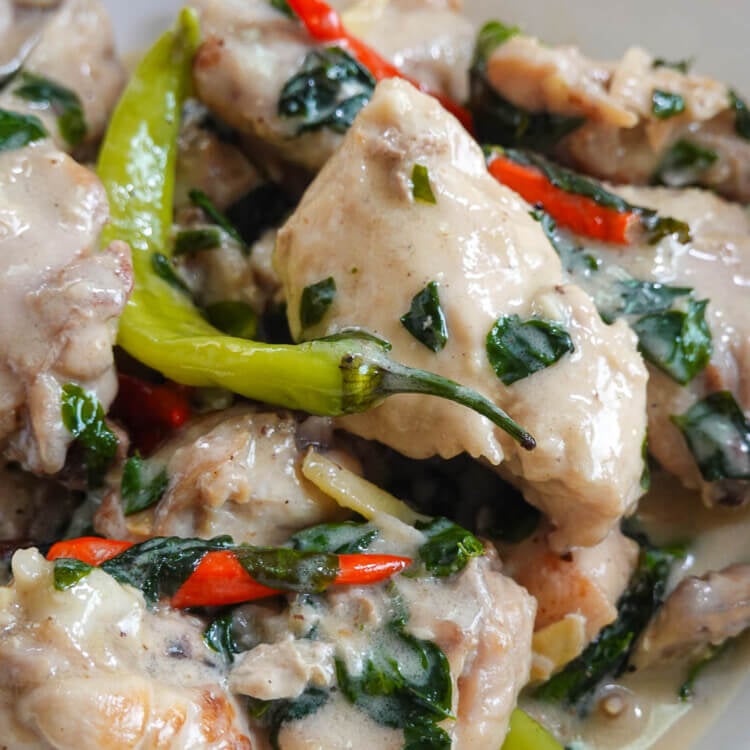
Ginataang Manok
Cut-up whole chicken, gata, chili, malunggay, and dahon ng sili. No squash, no papaya, nothing to stretch it. Just the chicken and the sauce. This is everyday food, the kind you cook on a regular night to go with rice. Keep the pot from boiling hard once the gata is in.
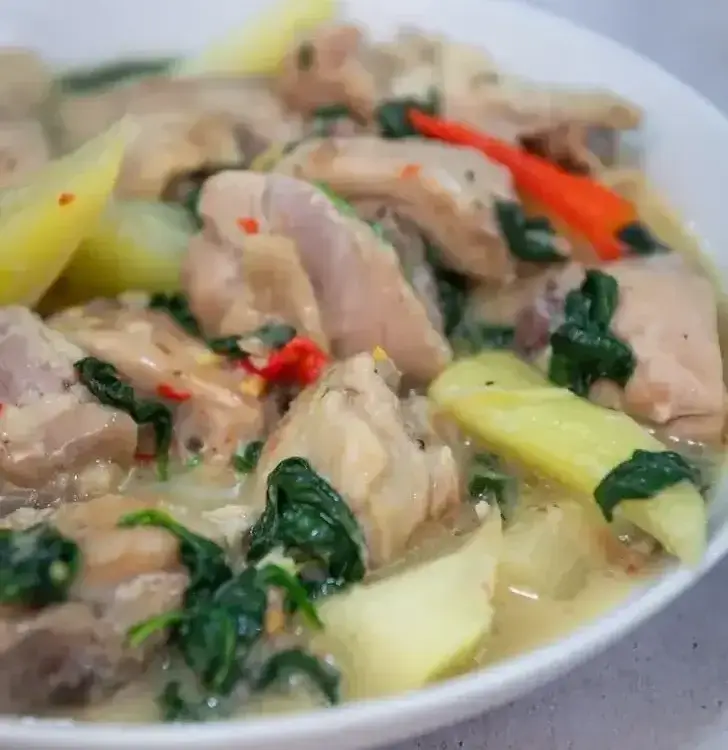
Ginataang Manok with Papaya
Chicken pan-fried first, then simmered in spicy coconut milk with green papaya and spinach. Pan-frying takes about a minute and a half per side and leaves browned bits that add flavor to the sauce. The papaya goes in for the last five minutes so it stays firm. Good when it is chilly out.
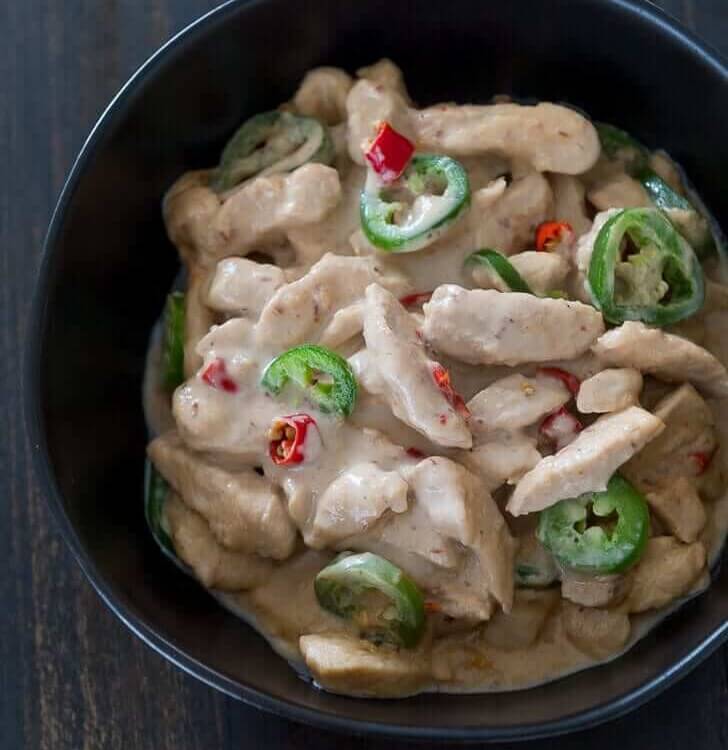
Chicken Bicol Express
Bicol express built on chicken instead of pork belly. Same shrimp paste, same chili, same reduced coconut sauce. The chicken makes it less rich than the pork belly version, and it cooks faster. If you want the whole family of these, I also have Seafood Bicol Express and Pork Chop Bicol Express.
Fish in Coconut Milk
Fry the fish before it goes into the gata. My mom taught me that and I have never stopped doing it. The coating holds the fish together through the simmer, and it thickens the sauce a little as it cooks. Delicate fish can fall apart during the simmer.
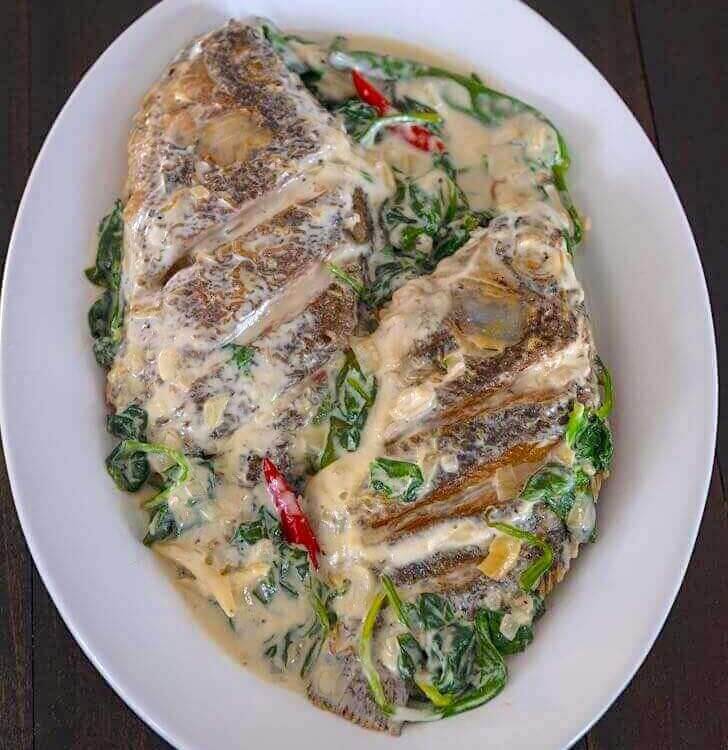
Ginataang Tilapia
Fried tilapia simmered in coconut milk with spinach, ginger, garlic, and chili. Get the onion, garlic, and ginger fragrant before the gata goes in. I season with fish sauce. This is the kind of dish where you look down and realize you have already gone through two cups of rice.
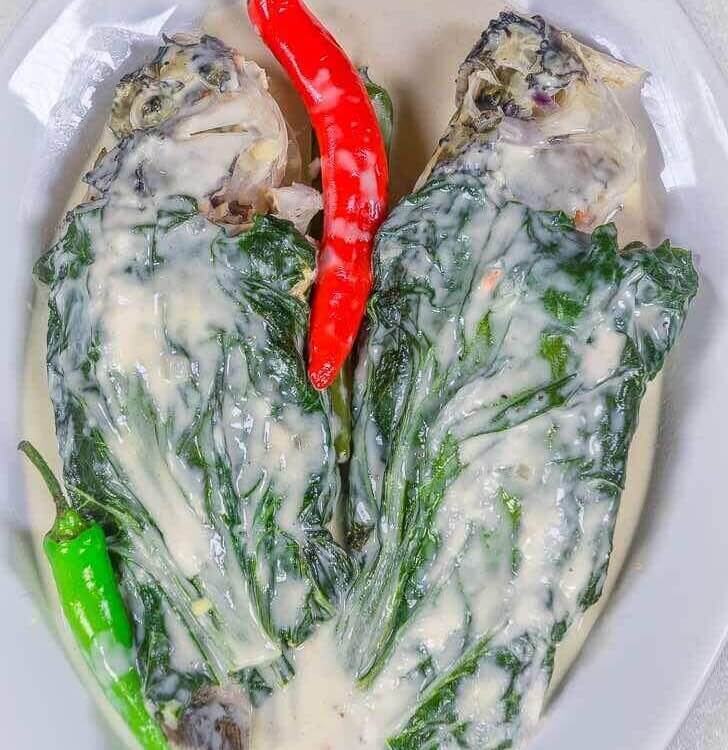
Sinanglay na Tilapia
A Bicolano dish. The tilapia is stuffed with tomato, onion, ginger, and garlic, wrapped in bok choy, then simmered in coconut milk. I use two bok choy leaves per fish so the whole thing is covered. A friend from Bicol told me they tie the fish with lemongrass instead, which holds the stuffing in and adds aroma to the sauce.
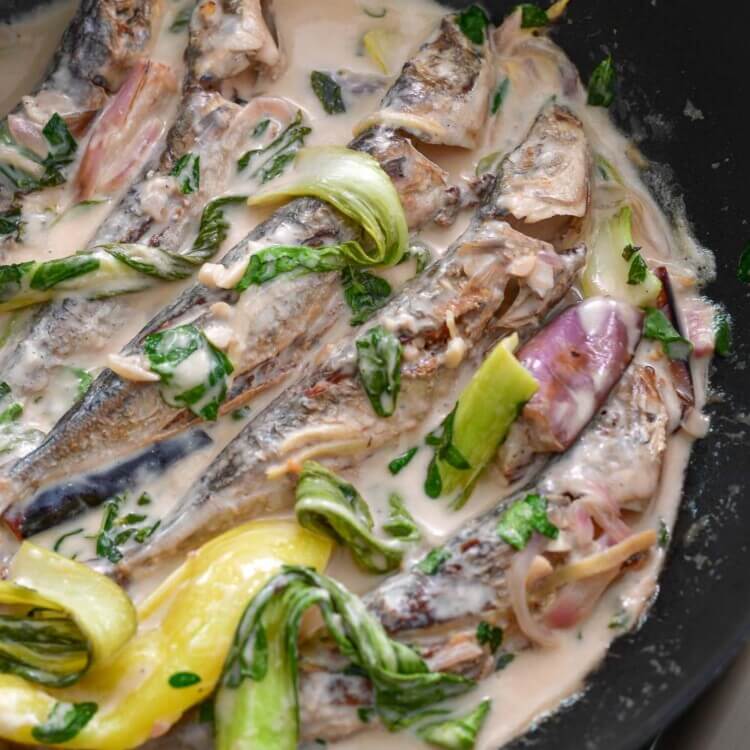
Creamy Coconut Milk Fish Stew
Galunggong fried crisp, then simmered with eggplant, baby bok choy, and malunggay. A splash of vinegar cuts through the richness of the coconut milk. Season the fish first and let it sit ten minutes before frying. Tilapia, bangus, or tanigue all work if galunggong is hard to find.
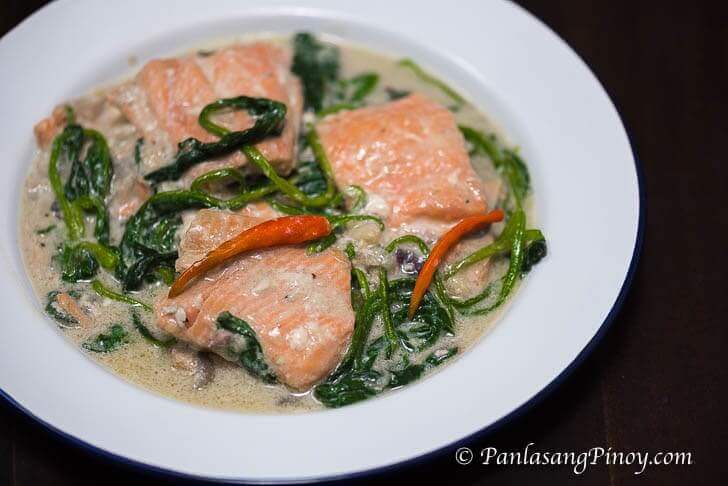
Ginataang Salmon
Salmon in gata with vegetables. Salmon carries more fat than tilapia or galunggong, so it holds together in the sauce without being fried first. Add it late and give it just a few minutes, because it goes from done to dry quickly.
Shrimp, Crab, and Squid in Coconut Milk
Seafood cooks fast, and coconut milk takes twenty minutes or more to reduce properly. So the order matters here. Reduce the sauce first, then add the seafood at the end.
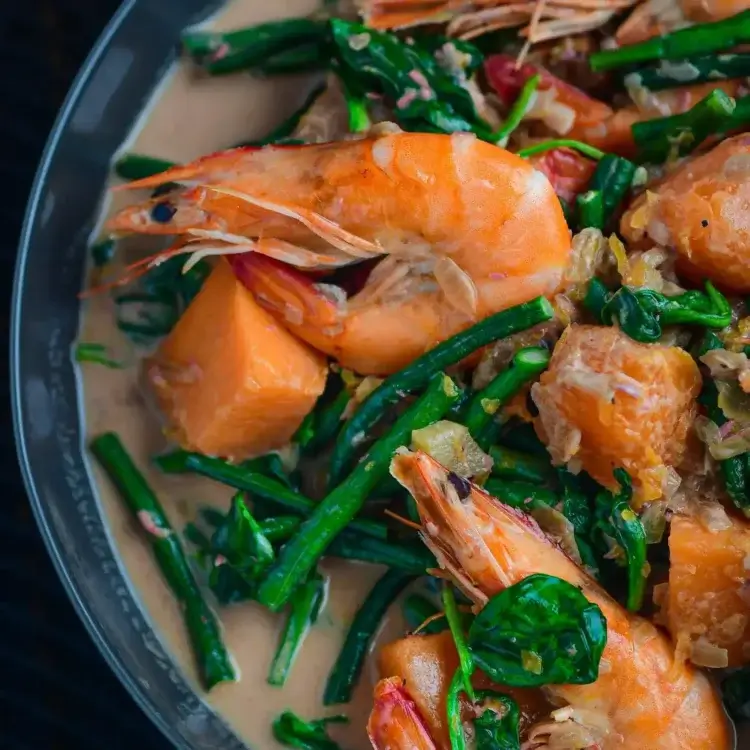
Ginataang Hipon
Shrimp in reduced coconut milk with garlic, ginger, and chili. Let the gata boil down by half before the shrimp goes in, which takes about twenty to twenty-five minutes over medium heat. The shrimp only needs five to seven minutes after that.
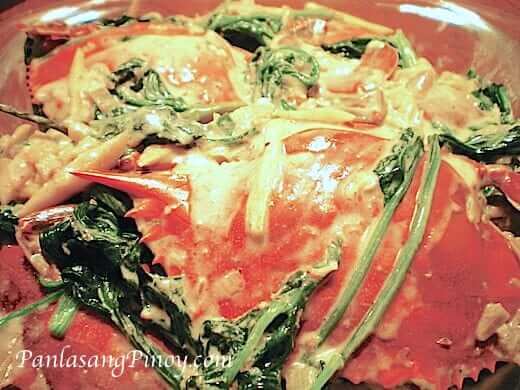
Ginataang Alimasag
Blue crabs with spinach in coconut milk, with shrimp paste and Thai chili. Cook the gata until it thickens and the oil comes out, which can take more than twenty minutes. Cut the crabs in half vertically before they go in so the flavor gets into the sauce. Squash and string beans work in place of the spinach.

Ginataang Kalabasa at Sitaw with Crab
Squash and string beans simmered in coconut milk with crab. Use boiled pork belly and cook it until the skin crisps before the vegetables go in. Slice the beans into two-inch pieces and cube the squash before you start, because once the gata is in the pot everything moves quickly.
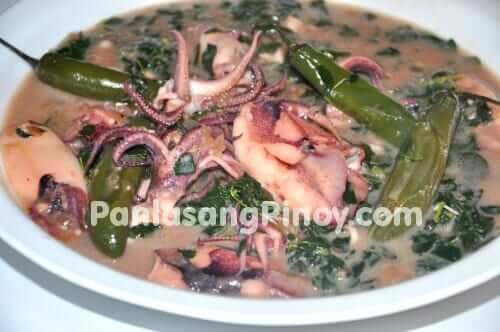
Ginataang Pusit
Squid in coconut milk with malunggay and Serrano peppers. Cook the squid for one minute, take it out, then reduce the gata for twelve to eighteen minutes before putting it back. That keeps the squid tender. Remove the ink sac when you clean it so the sauce stays pale.
Vegetables in Coconut Milk
Vegetables in gata are filling enough to be the main dish. A little pork or shrimp is usually all the meat these need, since the coconut milk carries most of the flavor. For tofu-based versions, I have a ginataang gulay with tofu and shrimp and a ginataang talong with malunggay and tofu.
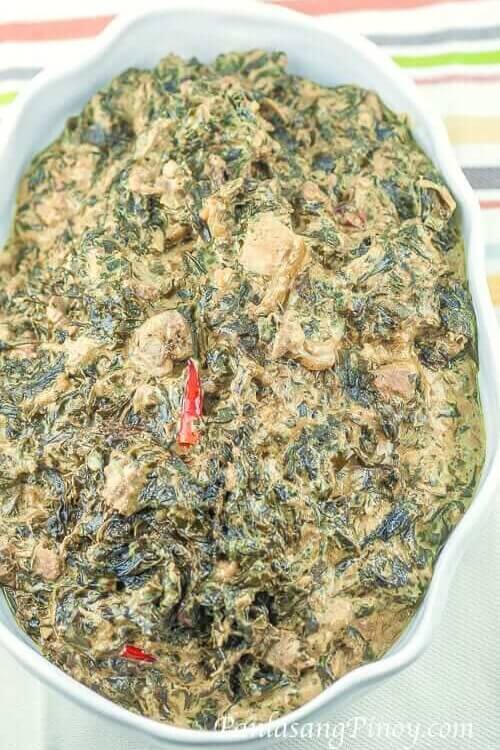
Laing
Dried taro leaves cooked in coconut milk with pork, chili, and shrimp paste. In Bicol they call it pinangat. No oil and no sautéing are needed here. Combine everything with the coconut milk and boil until the pork is tender. Do not stir right after the dried taro leaves go in. Let them sit in the coconut milk and cook down first. I also have a Spicy Laing, a Laing with Shrimp, and a Laing na Gabi made with fresh taro leaves instead of dried.

Ginataang Kalabasa
Squash and string beans simmered with seared pork belly and bagoong. The coconut milk goes in early and simmers forty to fifty minutes with the pork before the vegetables ever touch it. Add the squash for eight minutes and the beans for five. Start with a small amount of shrimp paste and taste before adding more.
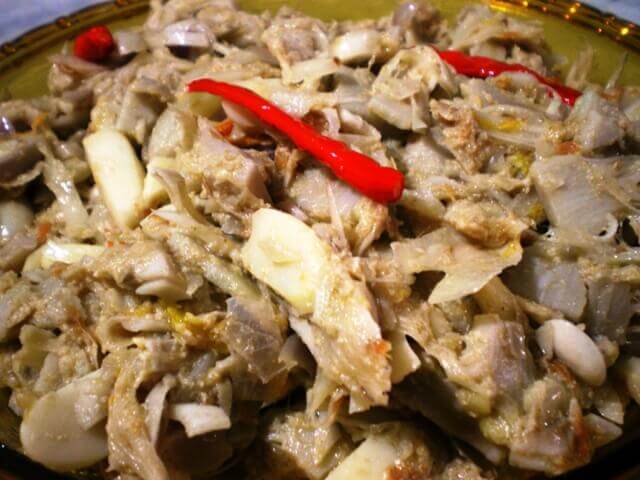
Ginataang Langka
Unripe jackfruit in coconut milk, cooked down until the langka is soft enough to break with a spoon. This is a main dish, not a side. Wear gloves or oil your hands when you cut fresh langka because of the sap. I have versions with malunggay and dilis, with tinapa flakes, and with pork.
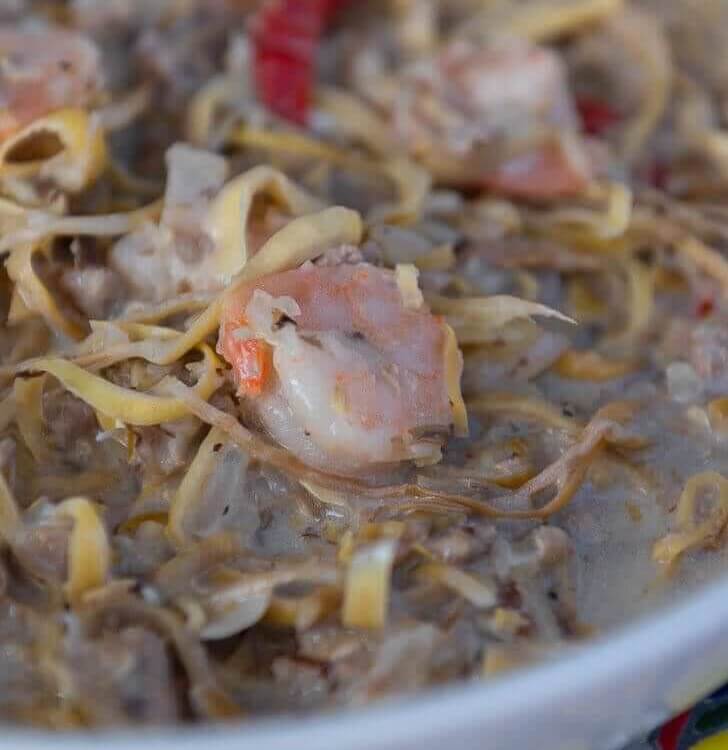
Ginataang Puso ng Saging
Banana blossom with ground pork in coconut milk. Vinegar goes in before the gata and cooks for about two minutes, which takes the raw edge off the blossom. Prepare the puso ng saging by peeling off the tough outer layers until you reach the pale core.
Sweet Ginataan
The sweet versions follow the same method, with coconut milk, sugar, and starch to thicken the mixture. These are meryenda, though I eat ginataang bilo-bilo cold for breakfast.
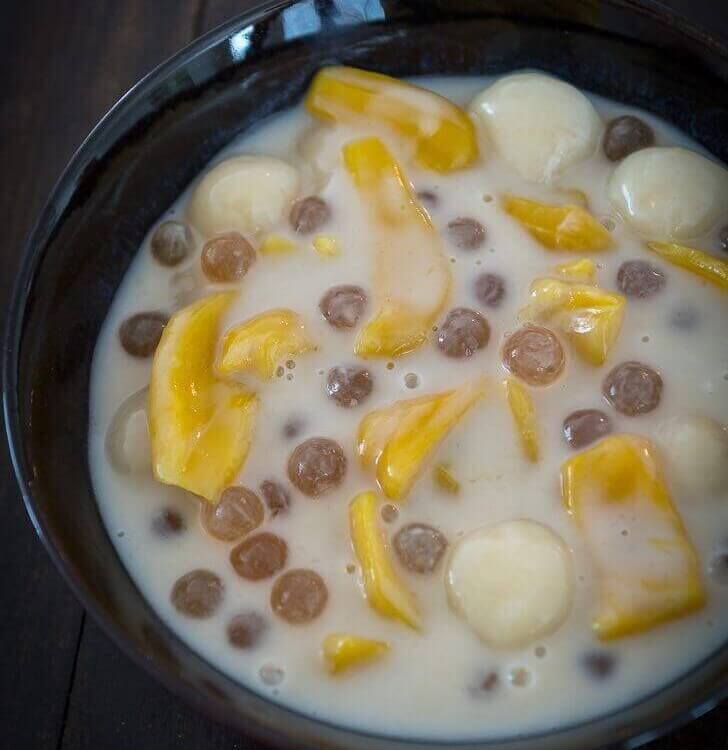
Ginataang Bilo-bilo with Langka
Glutinous rice balls, sago, and ripe jackfruit in sweetened coconut cream. Add the bilo-bilo after the langka and stir every three minutes so it does not settle and stick. I like this warm in the afternoon and cold in the morning. Two of the three need a little preparation, so here is how to cook sago pearls and how to make bilo-bilo.
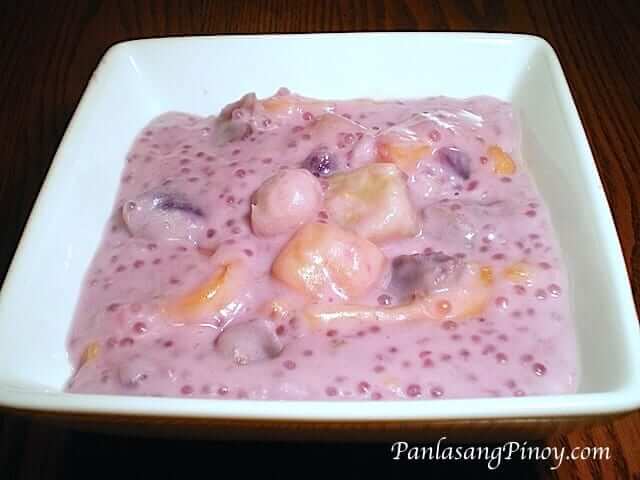
Ginataang Halo-halo
The loaded one. Sweet potato, ube, taro, saba bananas, sago, and bilo-bilo, all in coconut milk. In Davao and other parts of the country this is called binignit. Add the tubers before the bananas since they take longer to soften. The bilo-bilo goes in near the end so it does not overcook into the sauce.

Ginataang Mais
Corn kernels and glutinous rice cooked in coconut milk with sugar. It takes under twenty-five minutes from start to finish and has the shortest ingredient list of any dessert here. Stir it often once the malagkit starts to thicken so it stays smooth and does not catch on the bottom of the pot.
More Ginataan Recipes You Might Like
- Ginataang Bangus – Fried milkfish in coconut milk with shrimp paste, string beans, and Thai chili.
- Chicken Adobo sa Gata – Chicken adobo with coconut milk added near the end of cooking.
- Adobong Baboy sa Gata – The pork version, with the gata going in after the meat is tender.
- Pork Binagoongan sa Gata – Pork belly and bagoong with coconut milk and pan-fried eggplant.
- Ginataang Hipon, Sitaw at Kalabasa – Shrimp with squash and string beans, an easier option than dealing with crab shells.
- Ginataang Galunggong – Round scad simmered in coconut milk with Serrano peppers.
- Adobong Pusit sa Gata – Squid adobo finished with coconut milk. Remove the squid early so it does not toughen.
- Ginataang Baka – Beef in coconut milk with green beans and spinach.
- Pork Kaldereta sa Gata – Kaldereta with coconut milk in place of some of the tomato sauce.
- Ginataang Kuhol – Apple snails in coconut milk. Soak them overnight before cooking.
- Mixed Seafood in Coconut Milk – Shrimp, squid, and mussels together in one gata sauce.
- Ginataang Gulay – Squash and snake beans with pork and shrimp.
- Utan nga Langka – The Visayan version of ginataang langka, made with dried fish.
- Paksiw na Isda sa Gata – Fish steaks in coconut milk with vinegar, so no bones to work around.
- Binignit – The Visayan dessert with taro, saba, and landang.
- Ginataang Tulingan – Bullet tuna in coconut milk with eggplant. This one needs time to cook down.
- Ginataang Santol (Sinantolan) – Minced cotton fruit in coconut cream with ground pork.
- Shrimp Laing – Laing built around shrimp rather than pork.
- Adobong Hipon sa Gata – Shrimp adobo finished with coconut milk.
- Beef Kaldereta sa Gata with Peanut Butter – Coconut milk and peanut butter in the same pot.
- Pinakbet sa Gata with Squid – Pinakbet made with coconut milk instead of plain water.
- Crawfish in Coconut Milk with Spinach – Worth making if you can get crawfish in season.
- Snails with Spinach in Coconut Milk – A smaller-batch take on ginataang kuhol.
- Kilawing Tuna with Coconut Cream – No stove is needed. The vinegar does the cooking and the gata smooths it out.
Frequently Asked Questions
What does ginataan mean?
It comes from gata, the word for coconut milk. In practice you will see it two ways. Ginataan on its own usually points to the dessert, the one with bilo-bilo and sago in it. Ginataang plus an ingredient names the dish, as in ginataang manok or ginataang hipon. Both are the same cooking method.
Should I use fresh or canned coconut milk?
Fresh is better. The flavor is cleaner, and it reduces into a richer sauce. I use canned most of the time because of availability, and it works. If you buy fresh, the first extraction is the kakang gata, and it is thicker. Save it for the end of cooking.
Why did my coconut milk curdle?
The heat was too high. Coconut milk separates when it boils hard. Bring it up to a boil once, then drop the heat and let it simmer. Stirring too little also causes it, especially in a thick pot.
How do I get that oil that comes out of the sauce?
Keep reducing. Coconut milk cooked long enough at a steady simmer will release a small amount of oil that sits on the surface. It usually takes twenty minutes or more. Once you see it, the sauce is where you want it.
What is the difference between Bicol Express and gising gising?
Bicol express uses pork belly cut into strips with long green chili as the main vegetable. Gising gising uses ground pork with chopped green beans. Both are seasoned with bagoong and cooked in coconut milk. I have a version that combines them if you cannot pick.
Can I make these without shrimp paste?
Yes. Fish sauce is the closest substitute. It adds salt and some fermented flavor, though it will not taste exactly like bagoong. Salt on its own works if you have neither. The dish will taste lighter, so add a little at a time and taste as you go.
How long does ginataan keep?
Two to three days in the refrigerator in an airtight container. Coconut milk spoils faster than most sauces, so do not leave it out on the counter. Reheat it slowly over low heat, since a hard boil will split the sauce. A splash of water or coconut milk brings it back if it thickened too much.
For the savory dishes, watch the pot near the end. Coconut milk goes from thin to thick to broken in a short stretch, so turn off the heat as soon as you see oil beading on the surface. Serve them hot with plenty of white rice. Share and enjoy!