


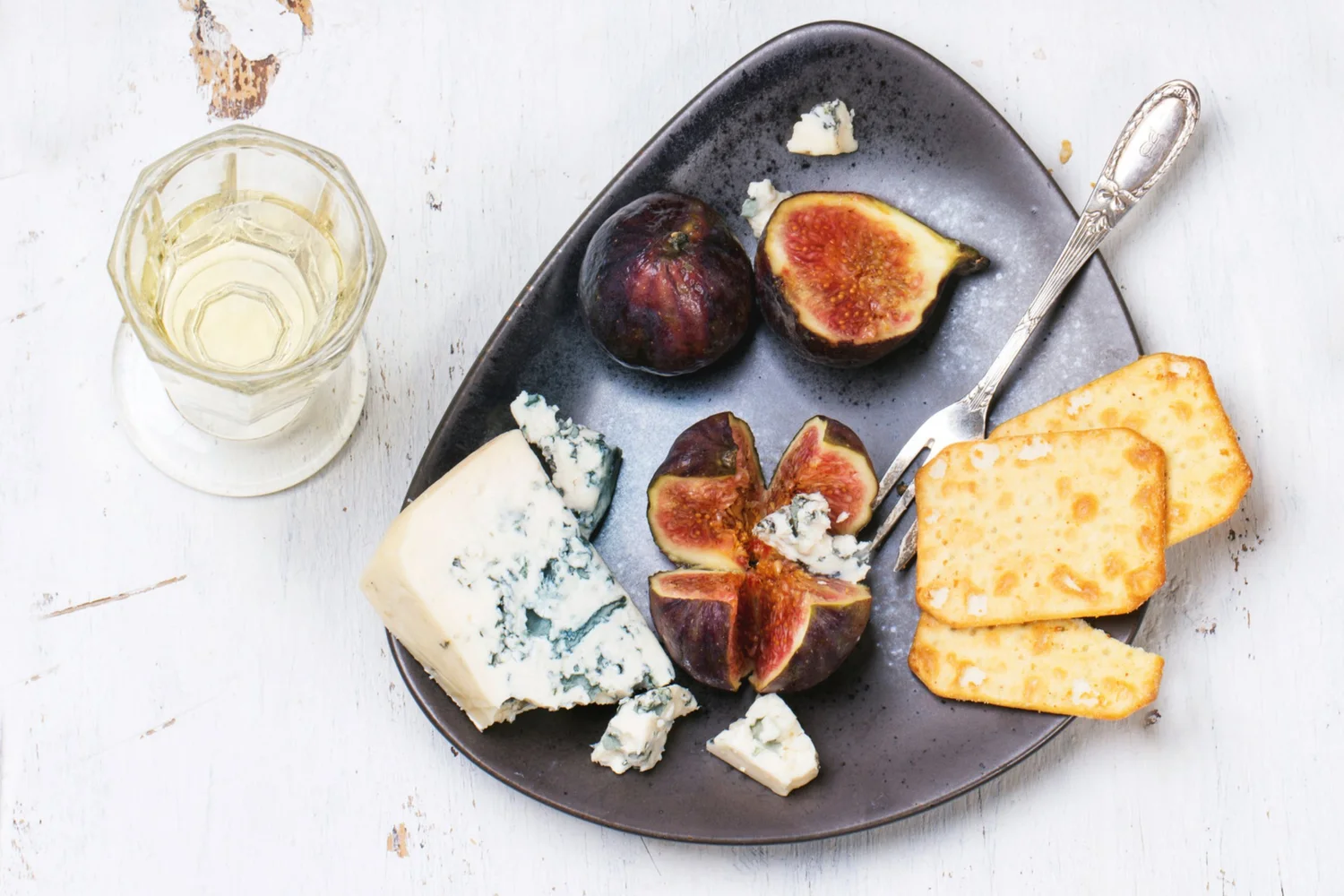
Fresh Figs or Dried Figs?
The sweetness of figs is what works so well with cheese. But should you choose fresh or dried? It partly depends upon the season. Fig harvest occurs twice a year: in the early summer (typically May-June) and then in late summer (September-October). If you fancy eating your figs fresh, these dates hold great importance since the season for fresh isn’t that long. It might surprise you to learn that 98% of fresh figs and 100% of dried figs sold commercially in the United States come from California. The most common varietals you’ll find in supermarkets include the dark purple Mission (think of that familiar robust fig flavor from the childhood Newton cookie) and Brown Turkeys (pretty to look at, less appetizing to eat because of their muted flavor), golden Tena and Sierras (think caramelized white chocolate), or green Adriatic and candy-striped Tiger Figs, also known as Panache (when ripe, redolent centers reminiscent of raspberry jam). When selecting fresh figs, give them a light nudge and if they yield ever so slightly, they’re ripe and ready to eat. But don’t sleep on them! Once ripe, the clock begins ticking before becoming overripe.
Chewier, denser, and more intense, dried figs bring the luxury of availability year-round. You can serve them as-is or rehydrate them to soften them up. To rehydrate them, hot liquid works faster, and longer steeping infuses the fruit more fully (masala chai-steeped figs, anyone?) and gets that figgy flavor into the infusing liquid in a snap. When shopping for dried figs, look for ones that don’t appear desiccated but instead offer a glossy polish (feel the bag for texture).