

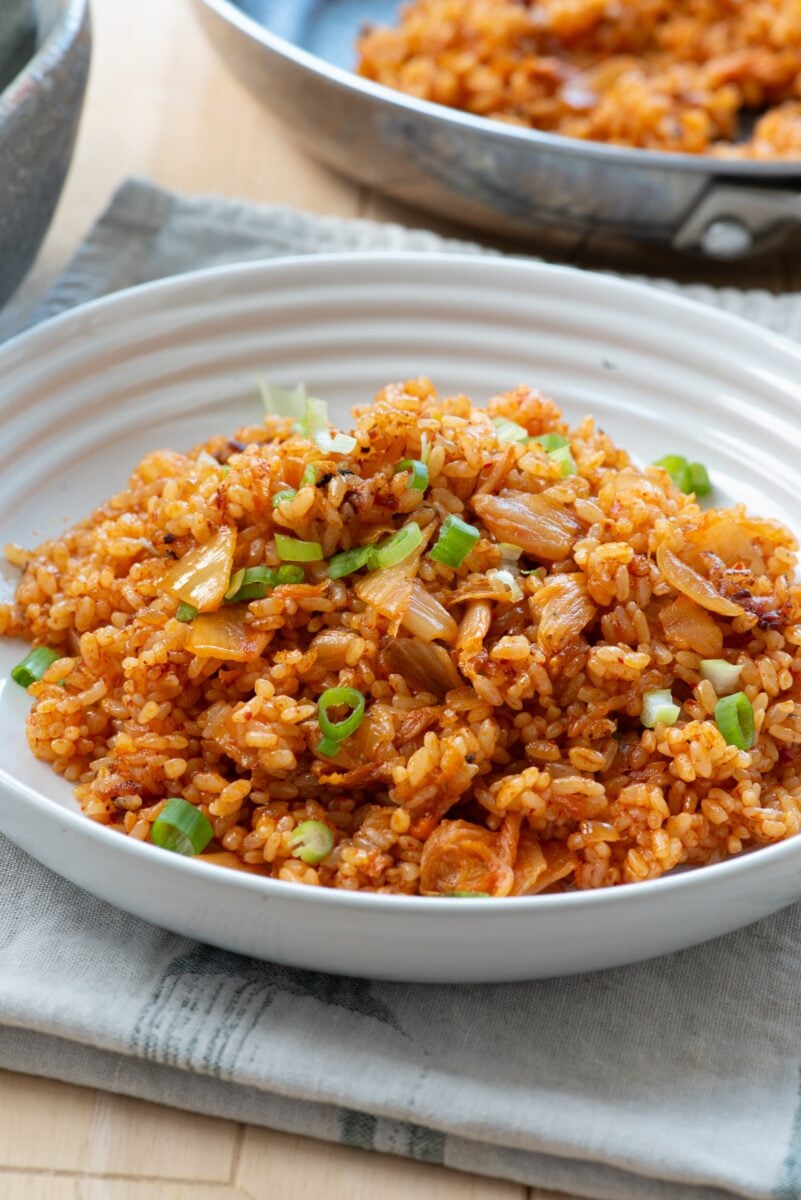
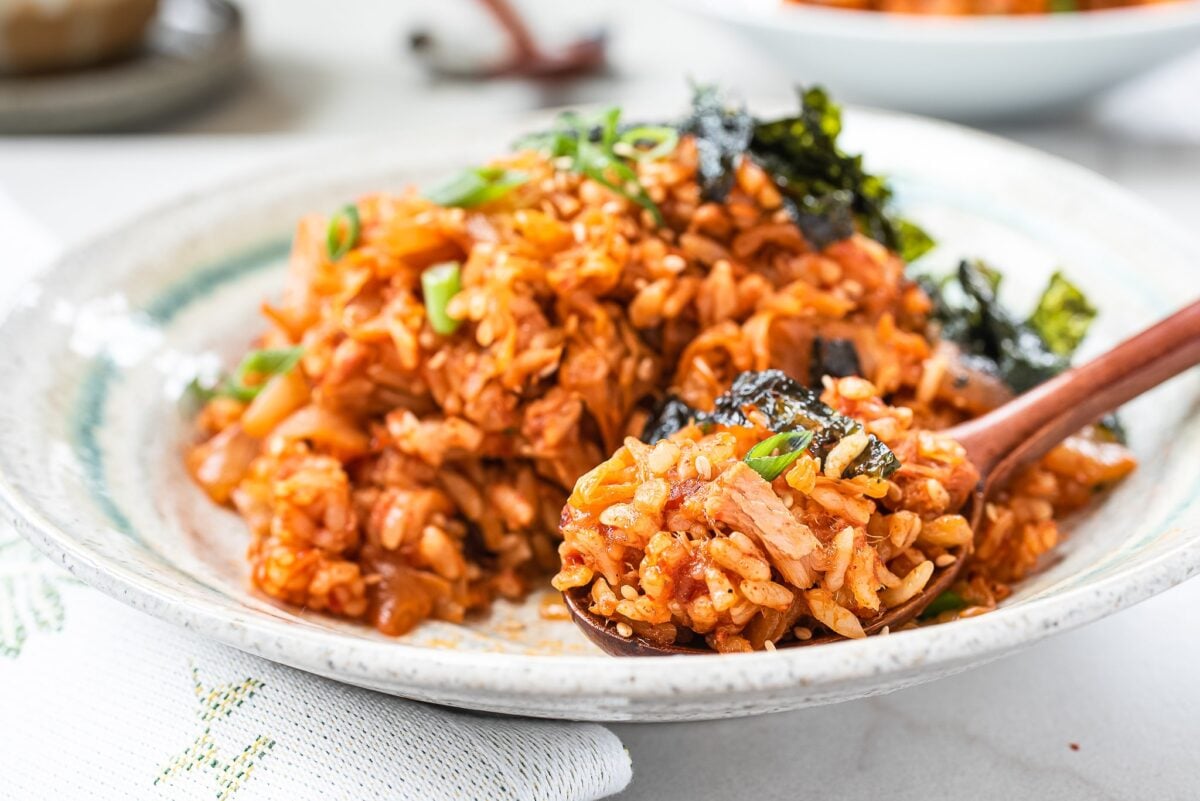
This easy kimchi fried rice recipe teaches you the basic techniques for making delicious fried rice. It’s versatile, too, so you can add any protein you like. It’ll quickly become one of your go-to easy meals!
What is kimchi fried rice?
Kimchi fried rice (kimchi bokkeumbap, 김치볶음밥) is a humble Korean dish made basically with kimchi and leftover rice. Since Korean homes almost always have these two staples, kimchi fried rice is a favorite go-to meal whenever there seems to be nothing to eat at home.
It’s especially popular among young people who are living on a low budget as it is a quick-fix meal, inexpensive to prepare, yet delicious and filling. And it’s highly versatile!
Kimchi fried rice ingredients
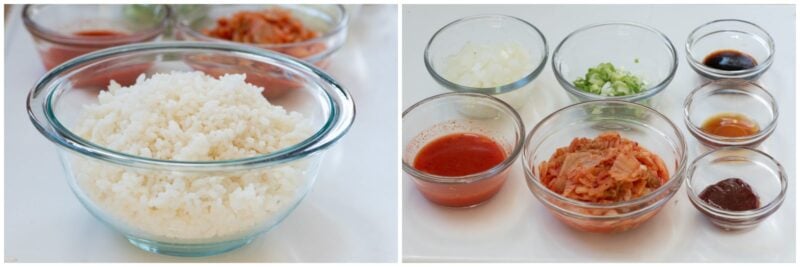
For this basic recipe, you’ll need the following ingredients and any variations you like from the next section:
- 2.5 cups cooked rice
- 3/4 cup diced kimchi
- 1/4 medium onion, diced
- 1 scallion, chopped
- 3 to 4 tablespoons juice from kimchi
- 1 tablespoon soy sauce
- 1 tablespoon gochujang (Korean chili pepper paste)
- oil for stir-frying
- 1 tablespoon sesame oil
- salt and pepper to taste
- optional garnishes – fried egg, roasted gim (dried seaweed), chopped scallions, and/or sesame seeds
Rice: Koreans typically use short-grain white rice for everyday meals. However, you can use whatever type of rice you prefer for fried rice. You can use refrigerated leftover rice, freshly made rice, or commercially packaged ready-made rice.
Kimchi: We usually use baechu (napa cabbage) kimchi for fried rice, but old radish kimchi such as kkakdugi or chongak kimchi, works well too. Kimchi is already packed with flavor, but it’s also common to add gochujang, soy sauce, and/or gochugaru for a deeper savory flavor and extra heat.
Kimchi fried rice variations
It’s very easy to add some protein or more vegetables to this recipe. Try these variations.
Proteins: Try any meat or processed meat, such as bacon, ham, Spam, pork, beef, chicken, etc. Canned tuna is also delicious. For this 2-serving recipe, I find around 3 to 4 ounces of meat is sufficient. Adjust to your taste.
Vegetables: If you prefer more vegetables, try carrots and mushrooms. Dice them into small pieces and stir-fry with the kimchi. You can also omit the onion in the recipe or add more if you like.

How to make kimchi fried Rice
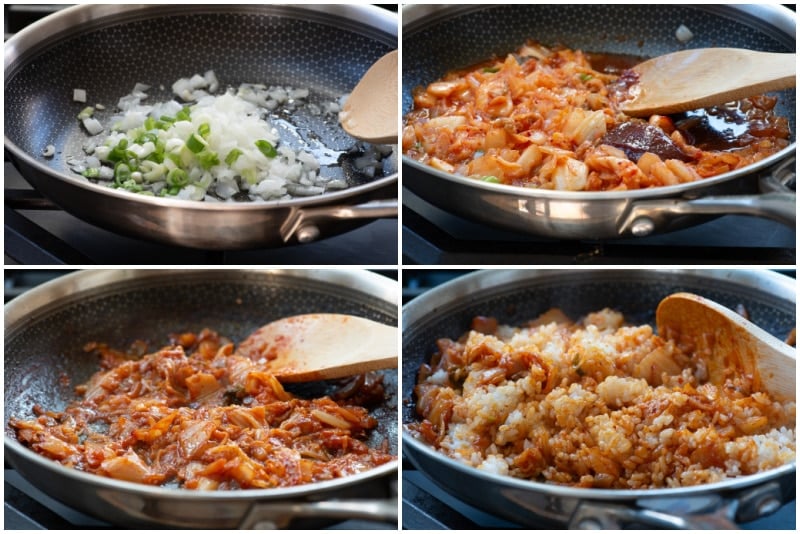
- Prepare the rice. If using refrigerated leftover rice or commercially packaged ready-made rice, microwave it briefly. Otherwise, cook fresh rice using slightly less water than usual so the rice is a bit drier.
- Heat a pan with 2 tablespoons of cooking oil over medium high heat. Add the onion and scallion and stir-fry briefly.
- VARIATIONS: If using meat or processed meat, add it to the pan along with the onion and scallion. Cook until the meat is lightly browned.
- Stir-fry the kimchi along with kimchi juice, soy sauce, gochujang, sesame oil, and optional sugar until the kimchi softens and deepens in color and most of the liquid has evaporated.
- Add the rice and stir-fry, breaking up any clumps and tossing until everything is well incorporated.
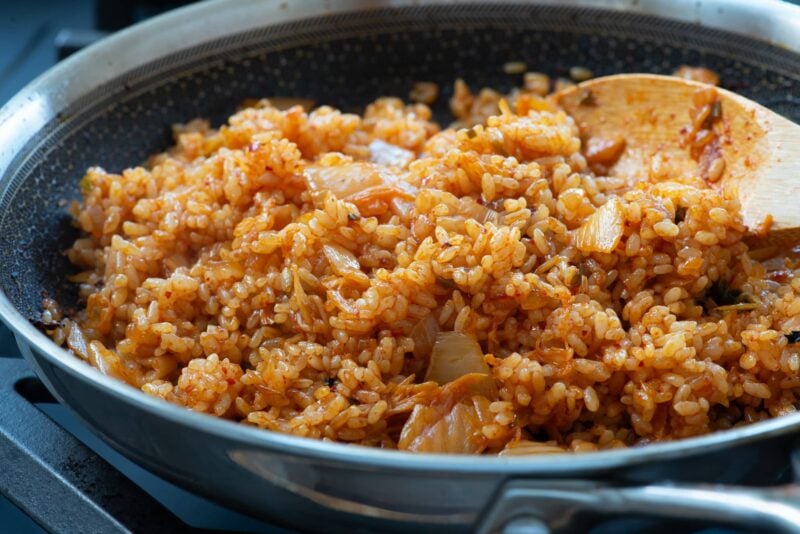
- Once the rice is evenly coated with the seasoning and lightly toasted, increase the heat to high and stir-fry for another 1 to 2 minutes, tossing frequently. Season with salt and pepper to taste.
- To serve, top with the optional fried egg and garnish with gim (dried seaweed) strips, chopped scallion, and/or sesame seeds.
Tips for making good kimchi fried rice
- If using refrigerated leftover rice or commercially packaged ready-made rice, microwave it briefly to soften it and make it easier to break up.
- When cooking with kimchi, well-fermented kimchi (or old kimchi) is best because it develops a deeper, richer flavor.
- Kimchi juice intensifies the kimchi flavor and provides the moisture needed to cook the kimchi thoroughly. If unavailable, add a little water to provide the necessary moisture.
- For spicier fried rice, add gochugaru instead of more gochujang. Too much gochujang will make the dish too salty.
More recipes with old kimchi

For more Korean cooking inspirations, follow along on YouTube, Pinterest, Twitter, Facebook, and Instagram.
Instructions
-
Prepare the rice. If using refrigerated leftover rice or commercially packaged ready-made rice, microwave it briefly to soften it slightly and make it easier to break up. Otherwise, cook fresh rice using slightly less water than usual so the rice is a bit drier. Fluff the rice and let it cool before using.
-
Heat a pan with 2 tablespoons of cooking oil over medium high heat. Add the onion and scallion and stir-fry briefly. If using meat or processed meat, see VARIATIONS below. Otherwise, skip to step 4.
-
VARIATIONS: If using meat or processed meat, add it to the pan along with the onion and scallion. Cook until the meat is lightly browned. If using bacon or pork belly, reduce the amount of cooking oil as these meats will release a lot of fat as they cook. For canned tuna, see the instructions in step 4.
-
Add the kimchi, kimchi juice, soy sauce, gochujang, sesame oil, and optional sugar. Stir-fry for 3 to 4 minutes, until the kimchi softens and deepens in color and most of the liquid has evaporated. Take your time with this step to allow the rich flavors to develop. If using canned tuna, add it now and gently stir-fry for another minute.
-
Reduce the heat to medium. Add the rice, and stir-fry for 3 to 4 minutes, breaking up any clumps and tossing until everything is well incorporated.
-
Once the rice is evenly coated with the seasoning and lightly toasted, increase the heat to high and stir-fry for another 1 to 2 minutes, tossing frequently. Season with salt and pepper to taste.
-
To serve, top with the optional fried egg and garnish with gim (dried seaweed) strips, chopped scallion, and/or sesame seeds.
Notes
- You can use refrigerated leftover rice, freshly made rice, or commercially packaged ready-made rice.
- Whenever you cook with kimchi, it is best to use well-fermented kimchi for the rich and robust flavor it develops. No exception here.
- Kimchi juice intensifies the kimchi flavor and provides the moisture needed to cook the kimchi thoroughly. If unavailable, add a little water to provide the necessary moisture.
- For spicier fried rice, add gochugaru instead of more gochujang. Too much gochujang will make the dish too salty.